Why Sourcing from a China Best Self-Cleaning Wet And Dry Vacuum Cleaner Supplier Could Be the Smartest Move
JINHUA, ZHEJIANG, CHINA, July 23, 2026 /EINPresswire.com/ -- Brand teams finalizing their 2026 OEM roadmaps face a more complex decision environment than in previous planning cycles. Consumer expectations for floor cleaning products have risen sharply — self-cleaning performance, hygiene engineering, and intelligent automation now rank alongside suction power as purchase drivers. Against this backdrop, the strategic case for partnering with a China Best Self-Cleaning Wet And Dry Vacuum Cleaner Supplier has grown considerably stronger. The following questions address the reservations that sourcing teams raise most consistently — and examine the evidence behind each answer.
Q1: Has Chinese Self-Cleaning Technology Actually Caught Up With Global Standards — or Is the Gap Still There?
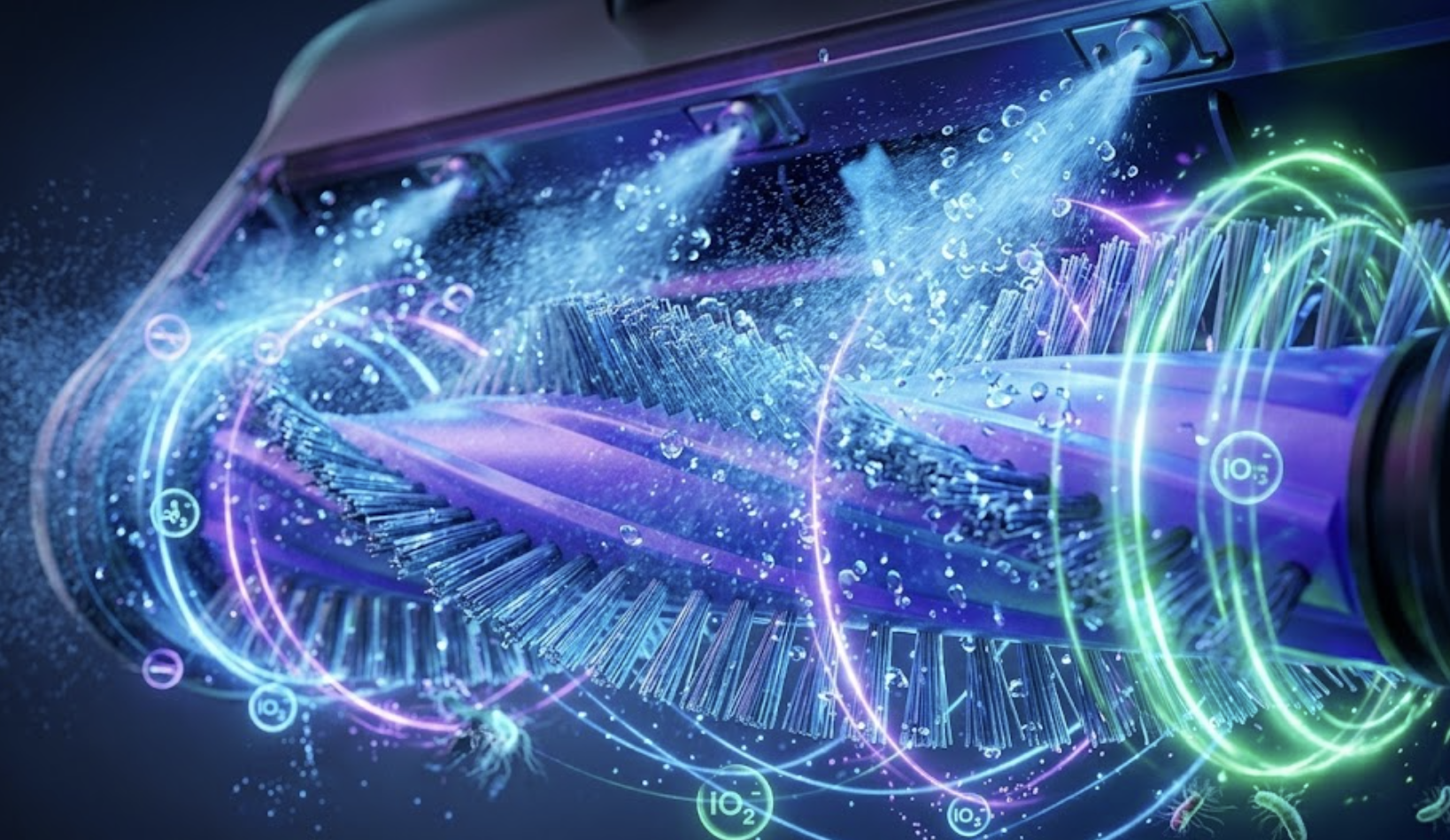
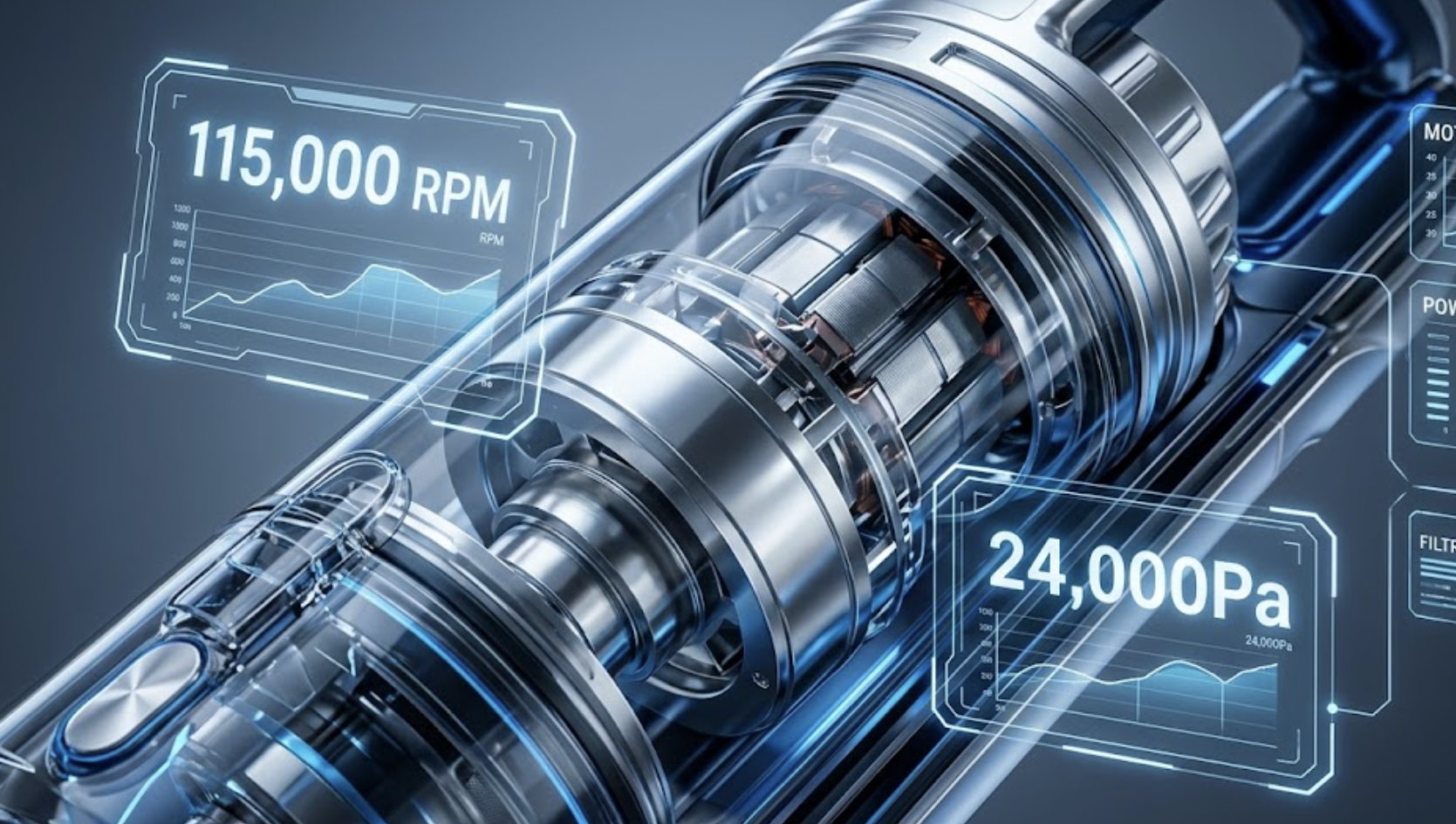
The more accurate question is whether a gap still exists at all among leading manufacturers. The CGH (Jinhua Chunguang Technology Co., Ltd.) Model 2507 serves as a useful reference point. It delivers 24,000Pa maximum suction through a BLDC motor running at 115,000 RPM. Its self-cleaning system combines 100-degree Celsius boiling water with a pre-installed electrolytic water generator mounted directly at the roller brush. That positioning matters: the generator produces hypochlorite ions immediately upon water contact and applies them directly to the brush surface, bypassing the dilution that occurs when electrolytic water travels through a full machine pipeline. The complete self-clean cycle finishes in under five minutes. This is not a feature borrowed from another market's playbook — it reflects original engineering investment at the component level.
Q2: Does Competitive Pricing from Chinese Suppliers Come at the Cost of Quality Consistency?
This concern surfaces frequently in early-stage sourcing conversations. The evidence, however, points in a different direction. The CGH Model 2350 places a BLDC 120W motor — with 150W total power and 15kPa suction — in an accessible-tier product that also includes automatic roller brush self-cleaning, single-edge wall cleaning design, noise reduction engineering, and voice status broadcasting. These are not premium-only features. They reflect a manufacturing capability that extends brushless motor performance and self-cleaning functionality into competitive price brackets without stripping the engineering substance. Furthermore, quality management at Jinhua Chunguang Technology Co., Ltd. operates within a structure that includes three-system management certification, intellectual property certification, and the financial disclosure obligations that accompany A-share listing on the Shanghai Stock Exchange. These institutional mechanisms create accountability that informal quality claims simply cannot replicate.
Q3: How Do Self-Cleaning Features Translate Into Real Consumer Satisfaction and Fewer Warranty Claims?
The connection runs through drying performance more than most product teams anticipate. A self-cleaning cycle that leaves moisture in the roller brush creates conditions for bacterial growth and odor — and generates negative reviews regardless of how effectively the machine cleaned the floor. CGH addresses this with a two-mode drying system. The silent drying mode runs for up to 90 minutes, suitable for overnight cycles when noise is a concern. The fast drying mode completes in as little as five minutes, enabling immediate brush readiness between cleaning sessions. Both modes integrate automatically after a self-cleaning cycle, removing dependence on user behavior to maintain hygiene over time. In practice, this behavioral design reduces the gap between what a self-cleaning system promises and what users actually experience — which is precisely where warranty claims and return rates originate.
Q4: Can One Supplier Realistically Cover Both Mid-Range and Flagship Tiers for a Diversified Product Portfolio?
Managing separate OEM relationships for different product tiers introduces coordination overhead, inconsistent quality standards, and fragmented development timelines. The more efficient model — where a single supplier delivers credibly across tiers — depends on genuine cross-tier manufacturing depth. The 2350 and 2507 models sit at meaningfully different points on the performance curve. The 2350 operates at 150W total power with standard self-cleaning and noise-optimized design for everyday household use. The 2507 runs at 280W with infrared pipeline sensing, 100-degree boiling water sterilization, electrolytic water generation at the brush, and dual-mode drying — a significantly more complex system targeting the premium segment. A supplier that engineers both products within the same manufacturing infrastructure demonstrates R&D investment depth that extends across the product tier spectrum, not just at its upper end.
Q5: With Ongoing Global Supply Chain Uncertainty, Is Relying on a China-Based Supplier Too Risky for 2026?
The premise of this question deserves examination. "China-based supplier" and "single-site supply chain risk" no longer describe the same thing for manufacturers that built distributed production networks before disruption became a planning priority. CGH operates six production bases: the Jinhua headquarters, Suzhou Kaihong, Suzhou Suntone, Malaysia CGH, Vietnam CGH, and Vietnam Suntone. This network spans different regulatory environments, logistics corridors, and labor markets. Consequently, a regional disruption affecting one base does not halt production across the system. For OEM partners placing volume commitments that extend across multiple product cycles, this structural redundancy converts an abstract risk concern into a concrete operational protection.
Q6: What Signals Indicate a Supplier Can Support a Brand Across Multiple Product Development Cycles?
Longevity in OEM partnerships depends on a supplier's ability to keep contributing at the frontier of product development — not just execute against a fixed specification. Patent portfolio composition provides one measurable signal. Chunguang Technology holds patents across all three categories: design patents, utility model patents, and invention patents. Each category reflects a different dimension of technical contribution, from aesthetic originality to functional engineering to core technology development. Collectively, they indicate active investment in protecting original work rather than replicating existing solutions. A second signal arises from the company's strategic pivot toward international consumer goods, particularly its focus on cleaning and home appliance products. A manufacturer that successfully commercializes its own consumer brand has navigated the full product development cycle — from engineering to market entry — and understands what end-market performance demands look like firsthand. That experience translates directly into more capable co-development relationships.
Q7: What Should a Brand Team Actually Do With This Information Before Finalizing 2026 Sourcing Decisions?
Three practical steps follow from the analysis above. First, establish a technical baseline by reviewing detailed product specifications across both mid-range and flagship models — this clarifies what the current category ceiling looks like before entering supplier conversations. Second, evaluate supplier institutional depth alongside product data: certifications, governance structure, and production network geography all affect partnership longevity in ways that individual product specs do not capture. Third, treat the first supplier conversation as a diagnostic rather than a negotiation — the questions worth asking concern development roadmap alignment, customization depth, and quality management processes rather than unit pricing alone.
CGH (Jinhua Chunguang Technology Co., Ltd.) — founded in 1985, incorporated in 2000, and publicly listed since 2018 — holds recognition as a National High-Tech Enterprise, a Zhejiang Invisible Champion, and a National Special New Little Giant Enterprise. Its product range, from the 2350 to the 2507, spans the technical breadth that diversified 2026 OEM strategies require.
Full product specifications and inquiry contacts are available at http://www.cgh-group.cn/.
Q1: Has Chinese Self-Cleaning Technology Actually Caught Up With Global Standards — or Is the Gap Still There?
The more accurate question is whether a gap still exists at all among leading manufacturers. The CGH (Jinhua Chunguang Technology Co., Ltd.) Model 2507 serves as a useful reference point. It delivers 24,000Pa maximum suction through a BLDC motor running at 115,000 RPM. Its self-cleaning system combines 100-degree Celsius boiling water with a pre-installed electrolytic water generator mounted directly at the roller brush. That positioning matters: the generator produces hypochlorite ions immediately upon water contact and applies them directly to the brush surface, bypassing the dilution that occurs when electrolytic water travels through a full machine pipeline. The complete self-clean cycle finishes in under five minutes. This is not a feature borrowed from another market's playbook — it reflects original engineering investment at the component level.
Q2: Does Competitive Pricing from Chinese Suppliers Come at the Cost of Quality Consistency?
This concern surfaces frequently in early-stage sourcing conversations. The evidence, however, points in a different direction. The CGH Model 2350 places a BLDC 120W motor — with 150W total power and 15kPa suction — in an accessible-tier product that also includes automatic roller brush self-cleaning, single-edge wall cleaning design, noise reduction engineering, and voice status broadcasting. These are not premium-only features. They reflect a manufacturing capability that extends brushless motor performance and self-cleaning functionality into competitive price brackets without stripping the engineering substance. Furthermore, quality management at Jinhua Chunguang Technology Co., Ltd. operates within a structure that includes three-system management certification, intellectual property certification, and the financial disclosure obligations that accompany A-share listing on the Shanghai Stock Exchange. These institutional mechanisms create accountability that informal quality claims simply cannot replicate.
Q3: How Do Self-Cleaning Features Translate Into Real Consumer Satisfaction and Fewer Warranty Claims?
The connection runs through drying performance more than most product teams anticipate. A self-cleaning cycle that leaves moisture in the roller brush creates conditions for bacterial growth and odor — and generates negative reviews regardless of how effectively the machine cleaned the floor. CGH addresses this with a two-mode drying system. The silent drying mode runs for up to 90 minutes, suitable for overnight cycles when noise is a concern. The fast drying mode completes in as little as five minutes, enabling immediate brush readiness between cleaning sessions. Both modes integrate automatically after a self-cleaning cycle, removing dependence on user behavior to maintain hygiene over time. In practice, this behavioral design reduces the gap between what a self-cleaning system promises and what users actually experience — which is precisely where warranty claims and return rates originate.
Q4: Can One Supplier Realistically Cover Both Mid-Range and Flagship Tiers for a Diversified Product Portfolio?
Managing separate OEM relationships for different product tiers introduces coordination overhead, inconsistent quality standards, and fragmented development timelines. The more efficient model — where a single supplier delivers credibly across tiers — depends on genuine cross-tier manufacturing depth. The 2350 and 2507 models sit at meaningfully different points on the performance curve. The 2350 operates at 150W total power with standard self-cleaning and noise-optimized design for everyday household use. The 2507 runs at 280W with infrared pipeline sensing, 100-degree boiling water sterilization, electrolytic water generation at the brush, and dual-mode drying — a significantly more complex system targeting the premium segment. A supplier that engineers both products within the same manufacturing infrastructure demonstrates R&D investment depth that extends across the product tier spectrum, not just at its upper end.
Q5: With Ongoing Global Supply Chain Uncertainty, Is Relying on a China-Based Supplier Too Risky for 2026?
The premise of this question deserves examination. "China-based supplier" and "single-site supply chain risk" no longer describe the same thing for manufacturers that built distributed production networks before disruption became a planning priority. CGH operates six production bases: the Jinhua headquarters, Suzhou Kaihong, Suzhou Suntone, Malaysia CGH, Vietnam CGH, and Vietnam Suntone. This network spans different regulatory environments, logistics corridors, and labor markets. Consequently, a regional disruption affecting one base does not halt production across the system. For OEM partners placing volume commitments that extend across multiple product cycles, this structural redundancy converts an abstract risk concern into a concrete operational protection.
Q6: What Signals Indicate a Supplier Can Support a Brand Across Multiple Product Development Cycles?
Longevity in OEM partnerships depends on a supplier's ability to keep contributing at the frontier of product development — not just execute against a fixed specification. Patent portfolio composition provides one measurable signal. Chunguang Technology holds patents across all three categories: design patents, utility model patents, and invention patents. Each category reflects a different dimension of technical contribution, from aesthetic originality to functional engineering to core technology development. Collectively, they indicate active investment in protecting original work rather than replicating existing solutions. A second signal arises from the company's strategic pivot toward international consumer goods, particularly its focus on cleaning and home appliance products. A manufacturer that successfully commercializes its own consumer brand has navigated the full product development cycle — from engineering to market entry — and understands what end-market performance demands look like firsthand. That experience translates directly into more capable co-development relationships.
Q7: What Should a Brand Team Actually Do With This Information Before Finalizing 2026 Sourcing Decisions?
Three practical steps follow from the analysis above. First, establish a technical baseline by reviewing detailed product specifications across both mid-range and flagship models — this clarifies what the current category ceiling looks like before entering supplier conversations. Second, evaluate supplier institutional depth alongside product data: certifications, governance structure, and production network geography all affect partnership longevity in ways that individual product specs do not capture. Third, treat the first supplier conversation as a diagnostic rather than a negotiation — the questions worth asking concern development roadmap alignment, customization depth, and quality management processes rather than unit pricing alone.
CGH (Jinhua Chunguang Technology Co., Ltd.) — founded in 1985, incorporated in 2000, and publicly listed since 2018 — holds recognition as a National High-Tech Enterprise, a Zhejiang Invisible Champion, and a National Special New Little Giant Enterprise. Its product range, from the 2350 to the 2507, spans the technical breadth that diversified 2026 OEM strategies require.
Full product specifications and inquiry contacts are available at http://www.cgh-group.cn/.
Chunguang Technology Co., Ltd.
+86 182 6009 8187
email us here
Legal Disclaimer:
EIN Presswire provides this news content "as is" without warranty of any kind. We do not accept any responsibility or liability for the accuracy, content, images, videos, licenses, completeness, legality, or reliability of the information contained in this article. If you have any complaints or copyright issues related to this article, kindly contact the author above.